A Logistics View on Translating the Code into Daily Operations
As of January 1, 2026, the Canada Grocery Code of Conduct is officially in effect, marking a significant step toward greater fairness, transparency, and predictability across Canada’s grocery supply chain. Much of the initial discussion around the Code has focused on commercial agreements and formal dispute resolution. While these elements are critical, the long-term success of the Code will ultimately depend on how its principles are applied in everyday operations.
From our perspective at Logistics Alliance, working daily with manufacturers, suppliers, carriers, and retailers, the Code is not just a policy framework. It is a practical guide for how supply chain partners communicate, plan, and respond when things don’t go as expected.
From Policy to Day-to-Day Practice
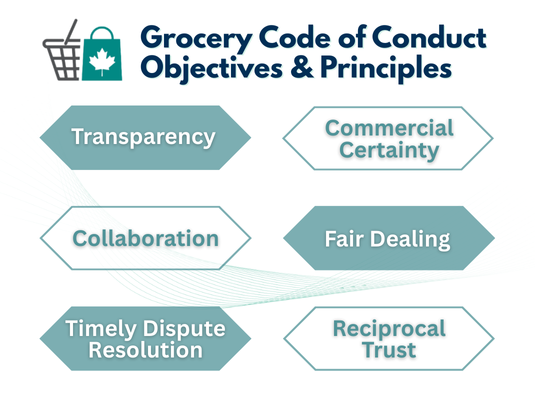
The Grocery Code of Conduct is grounded in principles such as good faith, transparency, timely communication, and predictability.
These principles come to life most visibly through logistics execution.
Shipment planning, appointment scheduling, documentation accuracy, and issue management are often where alignment either holds, or breaks down.
In our experience supporting inbound grocery distribution across Canada, many of the challenges that later escalate into disputes or deductions originate at the operational level. Incomplete shipment details, misaligned transit times, last-minute changes, or unclear communication can create friction quickly, even when no party intends to act unfairly.
Operationalizing the Code means recognizing that compliance is not limited to contract language. It extends into how information flows between teams, how risks are flagged, and how exceptions are handled in real time.
The Logistics Lens on Code Alignment
Logistics Alliance operates at the intersection of suppliers and retailers, managing the physical movement of goods while coordinating with multiple stakeholders. This position provides a unique vantage point into how decisions made upstream and downstream impact execution, service levels, and relationships.
One consistent insight from this role is that prevention matters more than resolution. When shipments are planned accurately, expectations are aligned early, and communication is proactive, many of the situations the Code is designed to address never materialize.
Operational alignment supports the Code’s objectives in tangible ways:
- Transparency in execution ensures all parties are working from the same information.
- Proactive communication reduces surprises and allows time for collaborative adjustment.
- Clear documentation and visibility support fact-based conversations when exceptions occur.
- Consistent processes limit ambiguity and reduce the likelihood of misunderstandings.
These practices are not new, but the Code reinforces their importance and encourages greater consistency across the industry.
Preventing Issues Before They Become Disputes
A common misconception is that the Grocery Code of Conduct primarily comes into play once a dispute arises. In reality, its greatest value may be in encouraging behaviours that reduce the need for disputes altogether.
From an operational standpoint, this means:
- Suppliers providing complete, accurate shipment information with sufficient lead time.
- Retailers maintaining clear scheduling expectations and consistent processes.
- All parties recognizing that operational realities – such as weather, congestion, and capacity constraints – require flexibility and collaboration.
Logistics execution becomes a proving ground for these principles. When operational teams are empowered to identify risks early, adjust plans collaboratively, and communicate clearly, the supply chain becomes more resilient and more aligned with the spirit of the Code.
Transparency as a Shared Responsibility
Transparency is a central theme within the Grocery Code of Conduct, and it extends well beyond pricing or contractual terms. In logistics, transparency takes the form of shared visibility into shipment status, timelines, and decision-making.
When suppliers and retailers have access to consistent operational information, discussions shift from reactive to constructive. Instead of debating what happened, teams can focus on why it happened and how to prevent similar issues in the future. This approach not only supports the Code’s intent but also strengthens long-term working relationships.
From our experience, transparency works best when it is treated as a shared responsibility, supported by clear processes, reliable data, and open communication across the supply chain.
Education, Adaptation, and the Role of Service Providers
As with similar Codes implemented internationally, adoption of the Grocery Code of Conduct will take time. It represents a cultural shift as much as a policy change. Organizations will need to educate teams, refine internal processes, and develop a common understanding of how the Code applies in real-world scenarios.
While service providers are not signatories to the Code, they can play an important role as educators, resources, and facilitators. By helping suppliers and retailers understand how operational decisions connect to Code principles, they can support smoother adoption and reduce friction during the transition.
At Logistics Alliance, our role has long been to help bring clarity and coordination to complex retail supply chains. As the industry adjusts to the Code, that role increasingly includes helping partners translate principles into practical, day-to-day execution.
Looking Ahead
The Canada Grocery Code of Conduct sets an important foundation for a more transparent and collaborative grocery ecosystem. Its success will depend not only on governance structures, but on how effectively its principles are embedded into everyday operations.
By focusing on execution, communication, and shared accountability, the industry has an opportunity to move beyond compliance toward stronger, more resilient partnerships. Operationalizing the Code is not about changing everything overnight, it is about aligning behaviours, systems, and expectations so fairness and transparency become part of how the supply chain works every day.