Why stronger freight performance often starts with a better transportation ecosystem
When suppliers ask how to save on freight, the conversation often starts with rate. In our experience at Logistics Alliance, that is only part of the answer.
In retail grocery and consumer products shipping, the more meaningful opportunity often comes from how freight is structured, coordinated, and consolidated across the network. That is where the right transportation ecosystem can create value that goes beyond a lower line-haul cost.
For suppliers shipping less-than-truckload freight into retail and distribution networks, consolidation can improve cost efficiency, reduce handling, support better service, and create more flexibility during volume swings. Those advantages become even stronger when consolidation happens inside an ecosystem that connects suppliers, carriers, retailers, and execution visibility.
Why consolidation matters in LTL freight

LTL shipping plays an important role when full truckload volume is not available. It gives suppliers flexibility and helps keep product moving. The challenge is that fragmented LTL freight can also create higher cost-to-serve, more handling, more touchpoints, and more risk across the shipment lifecycle.
That is where consolidation becomes valuable.
When multiple compatible shipments are brought together in a coordinated way, suppliers can benefit from stronger load efficiency and better use of available capacity. In practical terms, that can mean lower transportation cost, reduced destination handling, and a more stable execution path into the consignee.
At Logistics Alliance, we see consolidation as more than a freight tactic. It is part of a broader execution strategy that we can extend to share benefits with our customers.
The ecosystem advantage
Consolidation works best when it is supported by an adaptable ecosystem.
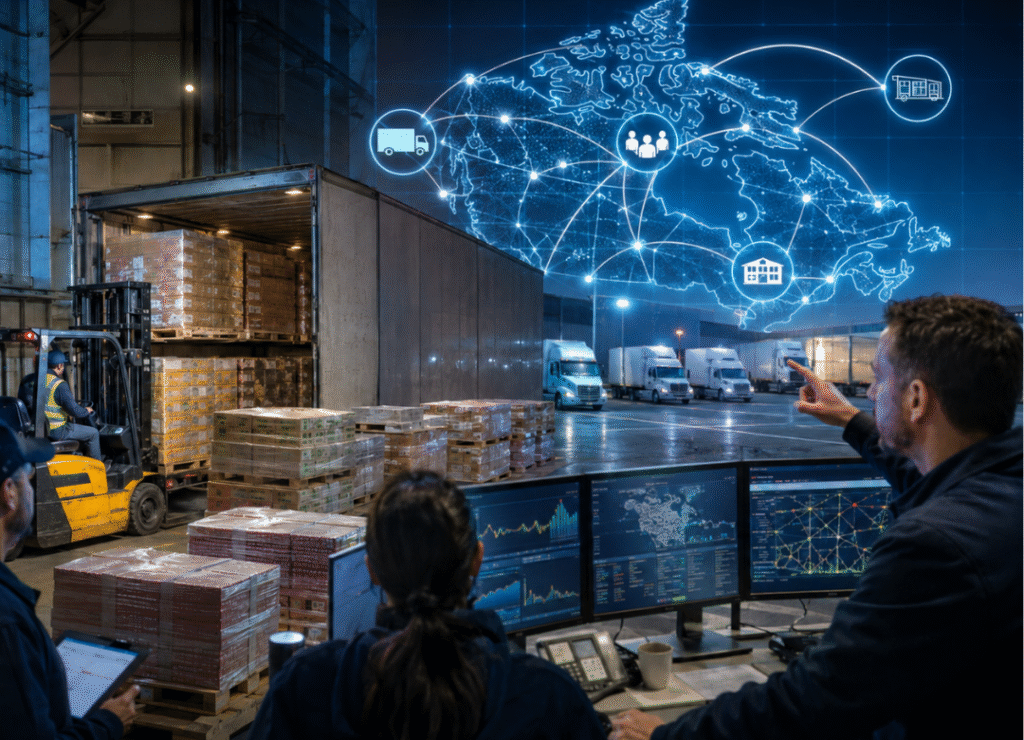
At Logistics Alliance, that ecosystem includes suppliers, carriers, retailers, and the visibility and coordination layer around the work. Each part contributes to a stronger transportation outcome.
Carrier ecosystem advantages
A strong carrier ecosystem creates flexibility that many standalone shipping relationships cannot match.
That can include:
- Better use of extra capacity and backhaul opportunities to help lower costs
- More flexibility during seasonal surges and volume spikes
- The ability to shift between modes depending on service requirements and urgency
For suppliers, that means an adaptable network that can respond more effectively when conditions change, instead of forcing every shipment into the same transportation model.
Retailer ecosystem advantages
On the destination side, ecosystem alignment can support better retail execution as well.
That can include:
- Proactive scheduling support at destination distribution centres
- Improved visibility that helps retailers make more informed decisions
- Stronger collaboration on order size and shipment frequency within retailer-specific programs, including Sobeys and Sysco
- Fewer downstream issues when product is available and moves as scheduled, including reduced risk of late fines in programs such as Sobeys and Sysco
From our perspective, one of the most overlooked freight-saving opportunities is better alignment between shipment planning and destination expectations. Freight cost is important, but execution cost matters too.
Supplier consolidation advantages
For suppliers, the direct benefits of consolidation are often the easiest to understand.
When multiple LTL shipments are combined more effectively:
- Economies of scale can help lower overall transportation cost
- Destination handling can be reduced, which helps minimize damage risk
- Transit execution can become more efficient as destination cross docks are avoided
- Wait time and other shared inefficiencies like driver unloading costs can be spread across the shipment group rather than absorbed by a single shipment.
This is especially valuable in retail grocery and consumer products freight, where consistency, timing, and handling discipline all matter.
Saving on freight is not only about the lowest rate
This is where we often encourage suppliers to look beyond the rate alone.
A cheaper shipment that creates more handling, more delays, less flexibility, or more downstream exceptions may not be the better freight decision. In our experience, the more effective question is not simply how to pay less for freight. It is how to create a transportation structure that lowers total cost while supporting stronger service and better on-shelf availability.
That is one reason Logistics Alliance focuses on connected execution, not just shipment movement.
Our ecosystem approach helps create the conditions for better consolidation, better visibility, and better decisions across the work between suppliers, carriers, retailers, and freight.
The takeaway
If you are searching for ways to save on freight, consolidation should be part of the conversation.
For LTL suppliers shipping into retail grocery and consumer products networks, the right ecosystem can create advantages that go well beyond rate. Better use of capacity. Better coordination. Better flexibility. Better execution at destination. Fewer avoidable costs created by fragmented transportation.
At Logistics Alliance, we believe that freight performs better when it is coordinated as part of a connected ecosystem, not managed as a series of isolated shipments.
Connect With Logistics Alliance
If you are reviewing your LTL shipping strategy and looking for ways to improve consolidation, reduce freight cost, and strengthen retail execution, Logistics Alliance can help. We support programs with Sobeys and Sysco and have experience across most national retail grocery programs. Connect with our team to discuss how our transportation ecosystem can support your operation.